
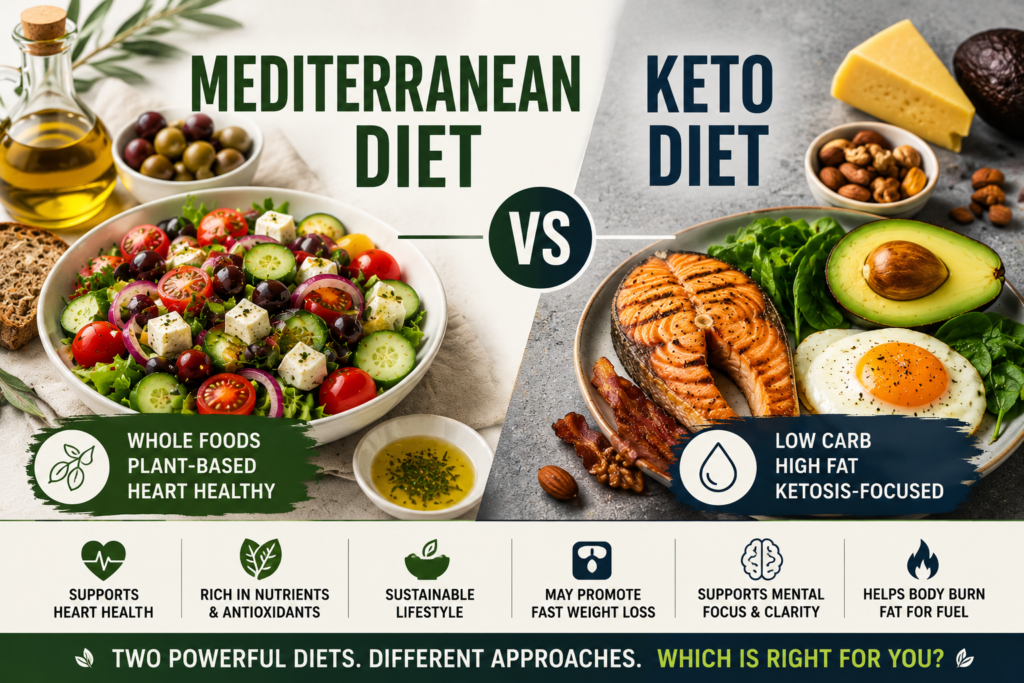
The Mediterranean diet vs ketogenic (keto) diet are two of the most talked-about eating plans today. Both can promote weight loss and improve health in the short term, but they differ greatly in food choices, sustainability, and long-term effects. Below, we compare them side-by-side, citing the latest research and expert opinions.
What Is the Mediterranean Diet?
The Mediterranean diet is a plant-forward eating pattern based on traditional diets of countries like Greece and Italy. It emphasises whole, minimally processed foods:
- Fruits and vegetables: Abundant servings daily.
- Whole grains and legumes: Beans, lentils, whole wheat, oats, etc.
- Healthy fats: Olive oil as the primary fat, plus nuts and seeds.
- Lean proteins: Fish and seafood several times a week, moderate poultry, eggs, and dairy (yoghurt, cheese).
- Limited red meat and sweets: Red meat is eaten sparingly; processed foods and sugary treats are minimised.
This diet also encourages social and lifestyle habits (e.g. sharing meals, physical activity, moderate wine consumption). It’s often described more as a lifestyle than a strict “diet”.
What Is the Keto Diet?
The ketogenic diet is a high-fat, very low-carbohydrate plan designed to induce ketosis (burning fat for fuel). Typical macronutrient ratios are roughly 70–80% fat, 10–20% protein, and <5% carbohydrates. Key features:
- Allowed foods: Meat, fish, eggs, cheese, butter, oils, avocados, nuts, and seeds.
- Low-carb veggies: Leafy greens, broccoli, cauliflower, zucchini, etc.
- Foods avoided: Grains, legumes, most fruit (except small portions of berries), starchy vegetables (potatoes, corn), and all sugary foods.
By slashing carbs (often to <20–50 g/day), keto switches the body’s metabolism to burn fat and produce ketone bodies for energy.
Key Differences: Mediterranean vs. Keto
- Carbohydrate intake: Mediterranean is moderate in carbs (whole grains, fruit, legumes), whereas keto is extremely low in carbs (almost no grains/fruit).
- Fat sources: Both diets use healthy fats, but keto is very high in fats (often including butter, cream) and allows some saturated fats (bacon, cheese). Mediterranean emphasises unsaturated fats (olive oil, nuts, fatty fish) and limits saturated fat.
- Protein sources: Mediterranean includes moderate fish, poultry, dairy; keto includes all meats liberally (including fattier cuts) and may overlook lean vs. fatty protein distinctions.
- Food variety: Mediterranean is flexible – no foods are strictly forbidden, only limited. Keto is strict, excluding many whole food groups (e.g. grains, beans, most fruits).
Also read: 25 Mediterranean Dinner Ideas for Weight Loss
| Aspect | Mediterranean Diet | Keto Diet |
| Carbs (% calories) | Moderate (~40–50%); focuses on whole grains, fruits, legumes. | Very low (~5–10%); eliminates most grains, beans, starchy veggies, and fruits to stay in ketosis. |
| Protein (% calories) | Moderate (~15–20%); from fish, poultry, beans, dairy. | Moderate (~20%); from meat, fish, eggs, dairy (often higher proportion of animal proteins). |
| Fat (% calories) | Veggies, fruits, whole grains, beans, nuts, olive oil, fish, poultry, yoghurt. | ~70–75%; high-fat (butter, cream, lard, oils, coconut oil, nuts) to replace carbs. |
| Fiber content | High – abundant vegetables, fruits, whole grains, legumes. | Low – few grains/legumes and limited non-starchy veggies. (<15 g/day typical vs. ~25–30 g in Med diet). |
| Allowed foods | Veggies, fruits, whole grains, beans, nuts, olive oil, fish, poultry, yogurt. | Meat, fish, eggs, high-fat dairy, oils, nuts, seeds, berries and non-starchy veg (spinach, broccoli, peppers). |
| Foods limited | Red/processed meat, sweets, refined grains, sugar-sweetened drinks. | All grains, most fruits, starchy veg, beans, sugary foods. |
| Sustainability | High – flexible, culturally familiar, sustainable long-term. | Low – very restrictive; often reported as difficult to maintain. |
| Typical Meal Example | Grilled salmon, quinoa salad with olive oil, steamed vegetables, Greek yoghurt with berries. | Bacon-and-egg omelette fried in butter, cheese, avocado salad, heavy cream coffee. |
Weight Loss and Body Composition
- Short-term weight loss: Both diets can produce rapid weight loss initially. Keto often shows faster early weight loss, largely due to water loss and glycogen depletion. In one review, early keto weight loss was mostly “fat-free mass” (water/muscle).
- 5% weight loss study: A 2022 study randomly assigned overweight adults to either a very-low-calorie keto diet (VLCKD) or a Mediterranean diet, aiming for 5% body weight loss. Keto participants hit the 5% mark in ~1 month, whereas the Mediterranean group took 3 months.
- Fat loss and waist size: Though keto was faster, the Mediterranean diet achieved greater reductions in fat mass and waist circumference (p<0.001). In fact, the Med group saw larger gains in lean body mass and total body water, indicating better body composition outcomes.
- Sustainability of weight loss: Keto’s weight loss tends to plateau after ~5–6 months and is hard to maintain long-term. In contrast, longer-term studies find Mediterranean-style diets lead to steady, sustained weight loss and better long-term maintenance. For example, a 6-year study showed the Mediterranean diet had the greatest adherence and sustained weight loss compared to low-carb and low-fat diets.
Both diets can produce weight loss, but the Mediterranean diet is generally easier to stick with, making its weight loss more sustainable.
Blood Sugar and Diabetes
- Mediterranean diet: Rich in fibre, whole grains, and healthy fats, this diet improves blood sugar control. Studies link it to a lower risk of developing type 2 diabetes and better glycemic control in diabetics. The American Diabetes Association even recommends a Mediterranean-style eating plan for diabetes management.
- Keto diet: By almost eliminating carbs, keto dramatically lowers blood glucose and insulin levels. Small trials in diabetics show very low-carb diets can allow some people to reduce or stop diabetes medications.
- Comparative study: In a Stanford crossover trial of adults with diabetes/prediabetes, both diets improved HbA1c similarly (about 7–9% drops). Fasting glucose and insulin also improved on both. However, only keto patients experienced higher LDL cholesterol, whereas Mediterranean followers had lowered LDL.
Will a Mediterranean diet lower A1c? Yes. High-fibre carbs and anti-inflammatory foods help stabilise blood sugar. The study above found a ~7% HbA1c drop on the Mediterranean diet. Consistently eating the Med diet’s veggies, whole grains, and healthy fats can help keep A1c in check.
Heart Health and Cholesterol
- Mediterranean diet: Strongly linked to heart health. A large review of 41 studies found Med diet followers had significantly lower risk of heart disease and stroke. It tends to improve cholesterol: studies show it increases “good” HDL and lowers “bad” LDL cholesterol, partly due to olive oil and omega-3 fats in fish.
- Keto diet: Effects on heart disease are mixed. Some keto studies note improvements in triglycerides and HDL, but many report increases in LDL (bad) cholesterol. The high saturated fat content (butter, bacon, fatty meats) in many keto plans likely raises LDL. Overall, keto’s long-term impact on cardiovascular health is uncertain and may depend on food quality.
- Cholesterol difference: In the Stanford study, LDL went up on keto but down on the Mediterranean diet. This gives the Mediterranean diet a clear edge for heart risk.
Other Health Benefits and Risks
- Brain health: The Mediterranean diet is linked to better cognitive function and lower dementia risk. It may protect memory and reduce depression symptoms in older adults. Keto also has notable brain effects: ketones can be neuroprotective, and keto is an effective treatment for epilepsy. Some research is exploring keto for Alzheimer’s and bipolar disorder, but evidence is still preliminary.
- Mental health (“BPD”): There’s no solid evidence that keto specifically helps borderline personality disorder (BPD). For overall mood, extremely restrictive diets (like keto) can stress the body and potentially worsen mood or lead to disordered eating. A balanced Mediterranean diet is generally safer for mental well-being.
- Inflammation: The Mediterranean diet’s antioxidants and anti-inflammatory fats help reduce chronic inflammation over time. Keto’s very high fat and low fibre may not have the same anti-inflammatory benefit.
- Nutrient adequacy: Mediterranean plans are nutrient-rich (fibre, vitamins, minerals). Keto can be nutrient-poor: cutting out fruits, whole grains, and beans often leads to low fibre and vitamin C, B6, folate, etc. Supplements or careful planning are needed on keto to avoid deficiencies.
- Side effects: Keto dieters often experience the “keto flu” (headache, fatigue, nausea) when starting. Long-term keto may increase risk of fatty liver, kidney stones, and constipation. Mediterranean diet has no such side effects — though it may be time-consuming or expensive to prepare (lots of fresh produce).
Sample Meal Plans
- Mediterranean-style day:
- Breakfast: Yoghurt with berries and a sprinkle of nuts.
- Lunch: Grilled chicken salad with olive oil and lemon dressing, whole-grain pita.
- Snack: Hummus with vegetable sticks.
- Dinner: Baked salmon with roasted vegetables and quinoa, finished with olive oil and herbs.
- Keto-style day:
- Breakfast: Scrambled eggs cooked in butter with spinach and cheese.
- Lunch: Chicken thighs cooked in olive oil, with a side of avocado and leafy greens (no grains).
- Snack: Cheese cubes and a few olives.
- Dinner: Beef stir-fry in coconut oil with broccoli and mushrooms.
(These are illustrative; individual plans may vary.)
What Experts Say
Dietary experts generally prefer the Mediterranean diet for most people. It’s often ranked the “healthiest diet” by nutrition authorities. The ADA and cardiovascular guidelines recommend Mediterranean-style eating for longevity. Harvard and Stanford studies note that Mediterranean and keto perform similarly in the short term, but Mediterranean wins on nutrients and adherence.
Stanford nutrition professor Dr Christopher Gardner notes there’s “no reason to restrict heart-healthy carbohydrate foods” (fruits, grains, beans) as keto does. In other words, giving up these foods for keto showed no extra health benefit, and made diets harder to follow. Thus, emphasising healthy carbs (Mediterranean diet) is seen as more balanced and sustainable.
Conclusion
Both the Mediterranean and ketogenic diets can yield health benefits, but they cater to different needs. If you want quick results and can strictly limit carbs, keto can jump-start weight loss and improve blood sugar. However, most experts agree that the Mediterranean diet – with its balanced, whole-food approach – is superior for long-term health, heart protection, and easy maintenance.
For lasting health and wellness, consider the Mediterranean diet your foundation: plenty of veggies, whole grains, beans, olive oil, and modest protein from fish and poultry. Keto may be useful in the short term or for specific medical reasons (like epilepsy), but for everyday living it’s wise to include all the healthy foods that the Mediterranean diet offers.
Sources: Authoritative nutrition studies and expert reviews have been cited throughout to ensure accuracy. Always discuss major diet changes with a healthcare provider or dietitian.
FAQs
Which is better, keto or Mediterranean?
It depends on your goals. For short-term weight loss, keto can be very effective. But for long-term health and weight maintenance, the Mediterranean diet is generally better. It’s easier to follow, safer for your heart and kidneys, and packs more nutrients. Many experts consider the Mediterranean diet a healthier default for most people.
Can the Mediterranean diet lower A1c (average blood sugar)?
Yes. Because it’s high in fibre and healthy fats (and low in refined carbs), the Mediterranean diet helps stabilise blood sugar. Clinical studies show it can significantly improve blood glucose control in diabetics. The American Diabetes Association even recommends it for this reason.
Will I lose belly fat on the Mediterranean diet?
Likely yes, if you lose weight on it. The Mediterranean diet promotes overall fat loss. In one study, people on a Mediterranean diet had larger drops in waist circumference (a measure of belly fat) than those on a keto diet. When combined with exercise, a Mediterranean diet can trim central (belly) fat over time.
What foods can you eat on a keto diet?
Foods high in fat and low in carbs: meats, fish, eggs, cheese, nuts, seeds, avocados, oils (olive, coconut). Low-carb vegetables (spinach, kale, broccoli, cauliflower, peppers) are allowed in moderation. You must avoid high-carb foods like grains (bread, pasta), starchy veggies, most fruit, and sweets.
What’s the difference between vegetarian keto and vegan keto?
Vegetarian keto allows eggs and dairy (cheese, yoghurt) but no meat or fish.
Vegan keto eliminates all animal products, using tofu, nuts, seeds, and oils instead.
Both need to be carefully planned to avoid protein and micronutrient deficiencies. Vegan keto especially requires supplements (B12, etc.) and is quite restrictive.
What is the difference between standard keto, targeted keto, and cyclical keto?
Standard Keto (SKD): Very low-carb all the time (typical keto as described above).
Targeted Keto (TKD): Low-carb eating but allows a small number of carbs around workouts (for extra energy during exercise).
Cyclical Keto (CKD): Strict keto for 5–6 days, then 1–2 days of higher-carb intake (like a “carb refeed”).
These variations are usually used by athletes/bodybuilders, but the health benefits of SKD apply.
Is a diet better than keto for rapid weight loss?
Very low-calorie diets (sometimes 600–800 kcal/day) can cause faster weight loss, but they are hard to sustain and can be unsafe without medical supervision. Likewise, extreme fasting can drop weight quickly but often leads to rebound gain. Keto is already an extreme low-carb plan; no common diet surpasses its early speed of loss without serious drawbacks. In any case, the safest approach combines healthy eating (like Mediterranean) with exercise and patience.
How does weight loss work on keto?
Keto lowers insulin and depletes stored glycogen, causing water loss and then fat burning. Being in ketosis can suppress appetite (high-fat meals make you feel full) and increase fat oxidation. However, much of the initial weight loss is water. Over time, calorie control and metabolism adapt, and weight loss may slow.
How does keto compare to low-fat or other diets?
Many studies have compared keto/low-carb diets to low-fat or Mediterranean diets. Generally, low-carb (including keto) leads to slightly more short-term weight loss than low-fat diets, and can improve triglycerides and blood sugar. But very low-carb diets are not superior long-term: one 6-year study showed the Mediterranean diet had greater weight-loss maintenance than low-carb or low-fat diets. The key difference is adherence: Mediterranean or moderate plans are easier to stick with.

Abhishek Negi is the founder and content creator behind Peak Mode Life. He writes about fitness, nutrition, wellness, relationships, and healthy living. His goal is to simplify health information into practical, actionable advice that helps readers build sustainable habits and improve their overall quality of life.