Quick Answer: The best stoicism books for men are Meditations by Marcus Aurelius (perspective and calm under pressure), Discourses by Epictetus (discipline and accountability), and Letters from a Stoic by Seneca (ambition and anxiety). Beginners should start with Donald Robertson’s How to Think Like a Roman Emperor before tackling the ancient texts directly.
Modern men are told, constantly, to be tougher. Work harder. Feel less. Push through. But if you actually read the Stoics — Marcus Aurelius, Epictetus, Seneca — you find something harder than toughness: a demand to stop being ruled by anger, fear, ego, comfort, and other people’s opinions. That’s a different kind of strength, and it’s the reason stoicism books have quietly become some of the most recommended personal-development reading for men navigating discipline, ambition, grief, and pressure.
This guide ranks the seven best books on stoicism specifically through that lens — not as a listicle of “alpha male” reading, but as a practical map of which book solves which problem. Each entry includes who it’s best for, an honest limitation, and a verdict, so you’re not just told a title is “great” — you’re told why, and whether it fits where you are right now.
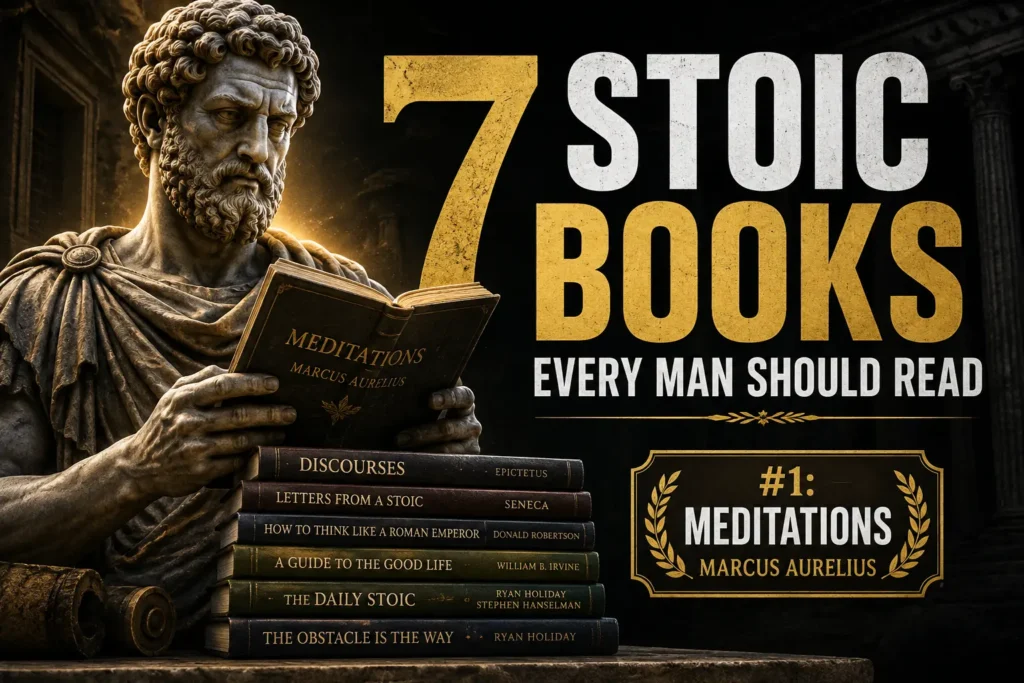
Summary Box: The 7 Best Stoicism Books for Men
| Rank | Book | Author | Best For |
|---|---|---|---|
| 1 | Meditations | Marcus Aurelius | Perspective, humility, calm under pressure |
| 2 | Discourses and Selected Writings | Epictetus | Discipline, resilience, self-control |
| 3 | Letters from a Stoic | Seneca | Ambition, anxiety, time and wealth |
| 4 | How to Think Like a Roman Emperor | Donald Robertson | Beginners wanting modern psychology |
| 5 | A Guide to the Good Life | William B. Irvine | A usable, structured entry point |
| 6 | The Daily Stoic | Ryan Holiday & Stephen Hanselman | Building a daily reflection habit |
| 7 | The Obstacle Is the Way | Ryan Holiday | Reframing setbacks and adversity |
Key Takeaways
- Stoicism is not emotional suppression. It’s about examining and guiding your judgments — not becoming numb to life.
- There’s no single “best” book. The right one depends on whether you need perspective, discipline, or a daily habit.
- Start modern, then go ancient if you’re new to philosophy — Robertson or Irvine before Marcus Aurelius makes the classics far easier to absorb.
- Pair a classic with a practice. Reading Seneca or Epictetus alongside stoic journaling turns theory into a real habit you can sustain.
- Watch for oversimplification. Books like The Obstacle Is the Way are excellent gateways, but Stoicism doesn’t claim every hardship is secretly good — it asks for a virtuous response to hardship, which is a very different thing.
How These Books Were Ranked
Rather than ranking by popularity or sales figures, this list uses five editorial criteria, each applied consistently across every title:
- Faithfulness to Stoic philosophy — does the book represent the actual ideas of Zeno, Seneca, Epictetus, and Marcus Aurelius, or a diluted version of them?
- Practical usefulness — can a reader actually apply it to modern work, relationships, and stress?
- Readability — is it approachable without a philosophy degree?
- Depth — does it go beyond motivational slogans into real ethical reasoning?
- Best-fit problem — does it clearly help with discipline, anxiety, leadership, grief, or self-control?
One clarification before the list: calling these “stoicism books for men” doesn’t mean Stoicism belongs to men. It means these titles are especially useful for challenges often marketed toward male readers — discipline, ambition, anger management, responsibility, adversity, and purpose. The philosophy itself is universal.
1. Meditations — Marcus Aurelius
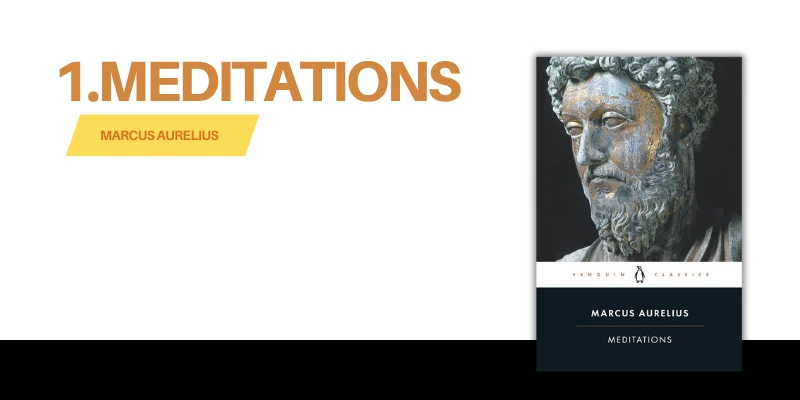
Best for: Men seeking perspective, humility, responsibility, and calm under pressure.
Marcus Aurelius never intended Meditations to be published. It’s a private journal — his own moral training notes, written while he governed an empire, fought wars, and buried people he loved. That’s exactly why it doesn’t read like a polished self-help book. It reads like a man talking himself down from anger, reminding himself of his duty, and rehearsing acceptance of death, again and again, because he needed to.
The recurring themes are simple to state and hard to live: govern your own judgments, do your duty regardless of recognition, accept what you cannot control, and act for the common good rather than your own reputation. If you’ve read anything about marcus aurelius teachings, this is the primary source all of it traces back to.
Why it ranks first: No other Stoic text puts you inside the mind of someone practicing this philosophy under real leadership pressure, illness, loss, and public responsibility simultaneously.
Limitation: The text is fragmented — it wasn’t written in order or for an audience — so beginners without notes or a strong translation can find it disorienting.
Blog verdict: Essential. But read it after an accessible modern guide if you’re new to Stoicism, not as your first exposure to it.
2. Discourses and Selected Writings — Epictetus
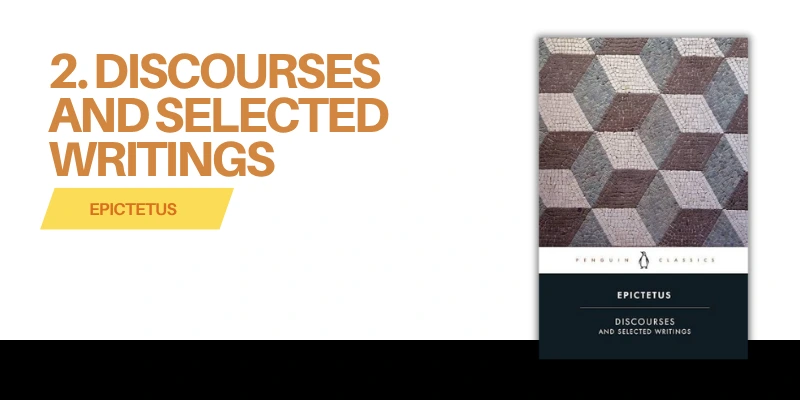
Best for: Discipline, resilience, emotional control, and taking responsibility for your own reactions.
Epictetus is the most demanding of the classical Stoics, and that’s precisely his value. Born a slave and later a respected teacher, he built his entire philosophy around one uncompromising line: separate what belongs to you — your judgments, choices, and actions — from what doesn’t, like your reputation, other people’s opinions, and outcomes you can’t fully control. His Discourses, recorded by his student Arrian, along with the shorter Enchiridion, are the clearest classical answer to the question “how do I stop being controlled by things outside myself?”
This is the book to read when you’re tired of excuses — including your own. It connects directly to questions like how to be self disciplined in a way that’s less about willpower tricks and more about where you’re placing your sense of control in the first place.
Why it ranks second: No other Stoic text attacks ego, excuse-making, and dependence on external validation this directly.
Limitation: The tone is blunt, sometimes harsh. Readers looking for warmth or reassurance may find Epictetus cold on first read.
Blog verdict: The best classical text for readers who want less inspiration and more internal accountability.
3. Letters from a Stoic — Seneca
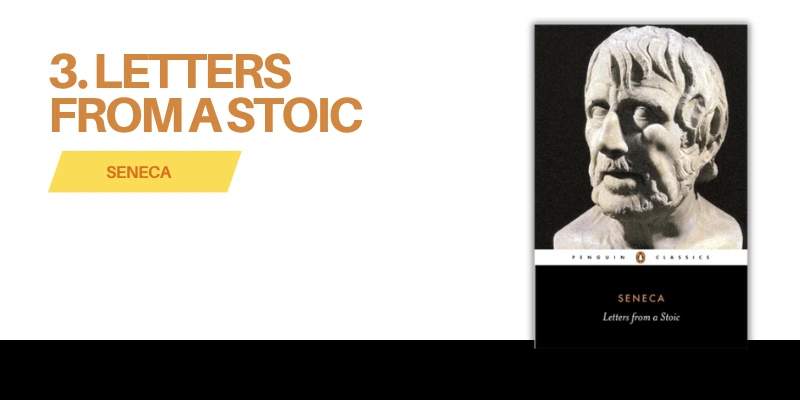
Best for: Ambition, wealth, anxiety, friendship, time management, and facing mortality.
Seneca writes like a friend, not a lecturer. These letters, addressed to his friend Lucilius, cover the exact pressures a modern ambitious professional deals with: status anxiety, the misuse of time, the seduction of wealth, grief, friendship, aging, and anger. If Marcus Aurelius is a private journal and Epictetus is a demanding teacher, Seneca is the wise, worldly friend who’s made mistakes and is honest about them.
That honesty matters. Seneca lived an extraordinarily privileged political life while writing about the dangers of luxury and ambition — a contradiction worth naming rather than ignoring. It doesn’t invalidate his insight; it makes his warnings more credible, because he was writing about temptations he was actually living inside.
Why it ranks third: It’s the most psychologically rich and conversational of the classical Stoic works — closest to reading modern essays.
Limitation: The gap between Seneca’s advice and his own lifestyle can feel jarring if you don’t address it directly.
Blog verdict: The best Stoic book for ambitious professionals who want to pursue success without being ruled by it.
4. How to Think Like a Roman Emperor — Donald Robertson
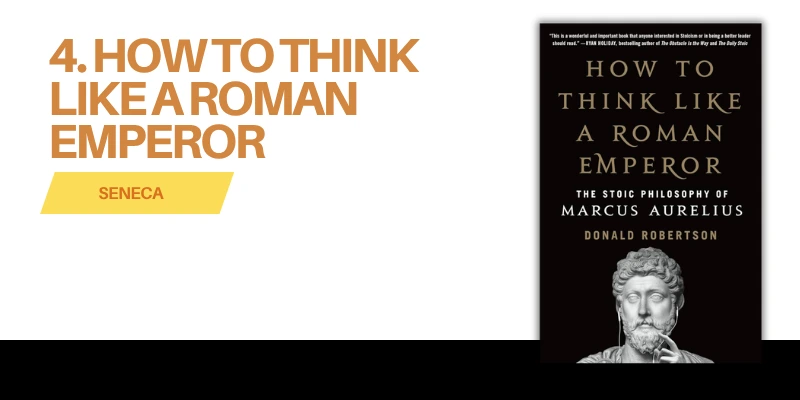
Best for: Beginners who want Stoicism connected to modern psychology.
Donald Robertson is a cognitive-behavioral psychotherapist, and it shows. He weaves Marcus Aurelius’s biography together with Stoic exercises that map naturally onto CBT techniques used today for anxiety, anger, and stress. It’s part biography, part self-help manual, and it makes ancient reasoning feel immediately usable.
Why it ranks fourth: It translates 2,000-year-old ideas into language and exercises a modern reader can apply the same day.
Limitation: It’s an interpretation and application guide, not a substitute for reading Marcus Aurelius directly.
Blog verdict: The best starting point if you want context and modern framing before tackling the ancient texts.
5. A Guide to the Good Life — William B. Irvine
Best for: Modern readers who want a structured, usable philosophy of contentment.
Irvine reconstructs Stoic techniques for reducing chronic dissatisfaction — the background hum of “not enough” that drives a lot of modern anxiety — and applies them to worry, insults, aging, loss, and the pull of fame or wealth. It’s organized more like a practical manual than a philosophical text, which is exactly why beginners gravitate toward it.
Why it ranks fifth: It’s readable, well-structured, and particularly strong at turning Stoic ideas into daily habits you can actually track.
Limitation: Some scholars and traditional Stoics dispute parts of Irvine’s modern reconstruction of the philosophy. Treat it as an accessible interpretation, not the final word on ancient Stoicism.
Blog verdict: A strong beginner’s book, especially if you want an actionable entry point rather than a historical one.
6. The Daily Stoic — Ryan Holiday and Stephen Hanselman
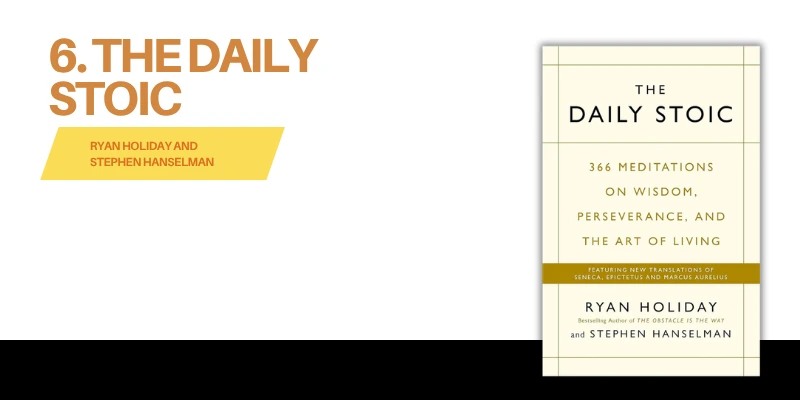
Best for: Building a daily reflection habit.
This is 366 short, page-a-day reflections drawing on Seneca, Epictetus, and Marcus Aurelius, organized around themes of wisdom, perseverance, and living well. Its entire value is structural: it lowers the barrier to consistency. It pairs especially well with stoic journaling — read the day’s passage, then write two or three lines on how it applies to something happening in your actual week.
Why it ranks sixth: The daily format makes consistency easy, which matters more than intensity when you’re trying to build better habits.
Limitation: A page-a-day structure can invite passive reading. It doesn’t give you the full conceptual foundation the classics do.
Blog verdict: Use it as a companion practice, not as your only Stoicism book.
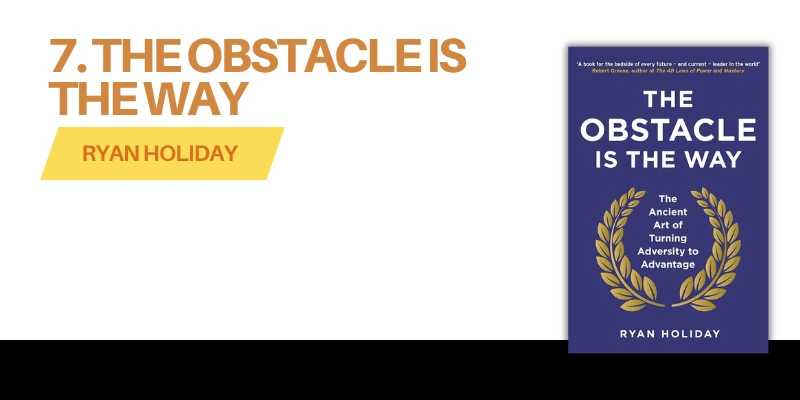
7. The Obstacle Is the Way — Ryan Holiday
Best for: Reframing setbacks at work, in sport, and in personal life.
Holiday’s breakout book turns a genuinely Stoic idea into a memorable modern framework: adversity can be worked through via perception, action, and persistence. It’s fast, punchy, and full of concrete historical examples, which is exactly why it’s an easy recommendation for readers who resist anything that feels like “philosophy.”
Why it ranks seventh: It’s the most motivating and accessible book on this list, with almost no barrier to entry.
Limitation: It simplifies Stoicism and can be misread as “every hardship is secretly good for you.” Stoicism doesn’t deny that pain is real or promise that obstacles produce success — it asks for a virtuous response to obstacles, which is a narrower and more honest claim.
Blog verdict: A great gateway book. Pair it with Epictetus or Seneca if you want the philosophical depth behind the framework.
What Stoicism Books Get Wrong When Poorly Written
Not every book claiming the Stoic label represents it accurately. Before you buy based on a bestseller list, know what to watch for:
- Equating Stoicism with emotional suppression. The philosophy is about examining and guiding your judgments — not shutting emotions off.
- Treating Marcus Aurelius as a flawless masculine icon. His value lies in constant self-correction, not perfection. He was writing to himself precisely because he kept falling short.
- Reducing Stoicism to discipline alone. Courage without justice, wisdom, and temperance isn’t Stoic virtue — it’s recklessness, or worse, domination dressed up in philosophy.
- Overselling books as therapy. Stoic practice can support reflection and complement professional care. It is not a replacement for mental-health treatment.
- Ranking by popularity instead of purpose. “Most influential,” “best for beginners,” and “best for daily practice” are three different questions — and this list treats them that way.
Your Reading Path: Where to Start Based on Your Goal
- Complete beginner: Start with Robertson’s How to Think Like a Roman Emperor, then move to Meditations.
- Need discipline and accountability: Go straight to Epictetus’s Discourses.
- Managing ambition and anxiety: Seneca’s Letters from a Stoic speaks most directly to this.
- Want a daily habit: Pair The Daily Stoic with one classical text so the daily reflections have real depth behind them.
- Rebuilding structure after a hard period: Combine Meditations with consistent daily routines of successful people — the philosophy gives you the “why,” the routine gives you the “how.”
Frequently Asked Questions
What is the best stoicism book to start with?
For most beginners, Donald Robertson’s How to Think Like a Roman Emperor is the easiest entry point because it explains Stoic ideas through modern psychology before you read the ancient texts directly.
Is Meditations by Marcus Aurelius hard to read?
It can be, since it’s a private journal rather than a structured book. Reading it with a modern annotated translation, or after an introductory guide, makes it significantly more approachable.
Are stoicism books only useful for men?
No. Stoicism is a universal ethical philosophy. This list focuses on the challenges — discipline, ambition, anger, responsibility — that are often marketed toward men, but the ideas apply to anyone.
What’s the difference between Seneca, Epictetus, and Marcus Aurelius?
Seneca writes conversationally about applying Stoicism to wealth, ambition, and daily adult life. Epictetus is direct and demanding, focused on what is and isn’t within your control. Marcus Aurelius offers a private, reflective account of practicing Stoicism while holding real power and responsibility.
Recap
- Start with a modern guide if you’re new to philosophy, then move to the classics.
- Meditations, Discourses, and Letters from a Stoic form the essential core of any Stoic reading list.
- Use The Daily Stoic and stoic journaling to turn reading into a habit, not a one-time read.
- Be skeptical of books that flatten Stoicism into pure discipline or toughness — real Stoic virtue includes justice, wisdom, and temperance too.

Abhishek Negi is the founder and content creator behind Peak Mode Life. He writes about fitness, nutrition, wellness, relationships, and healthy living. His goal is to simplify health information into practical, actionable advice that helps readers build sustainable habits and improve their overall quality of life.