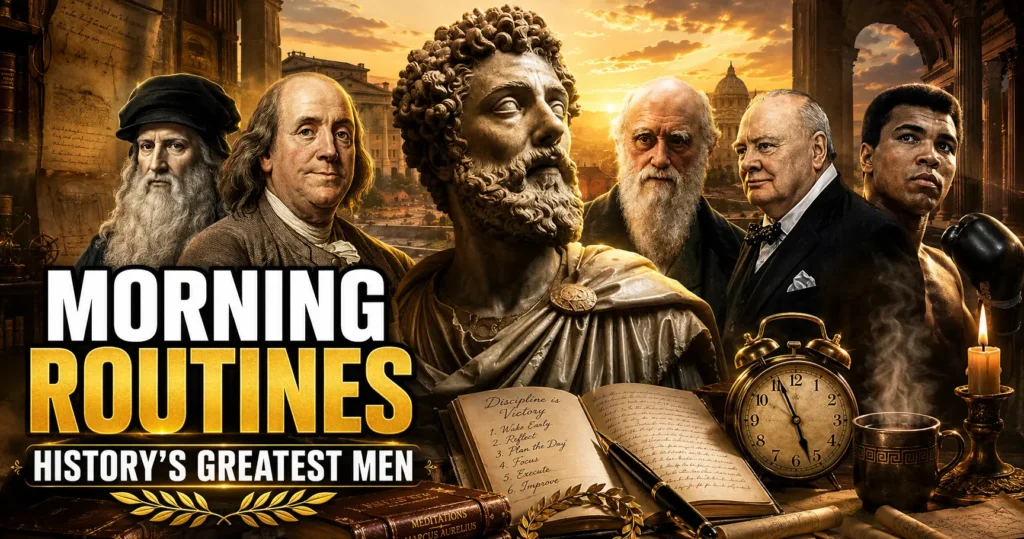
On a cold morning in the Roman frontier, somewhere near the Danube, a sixty-year-old emperor woke before his servants did. He did not reach for comfort. According to historical accounts, he reached for a private notebook, the one where he argued with himself about the kind of man he intended to be before the empire’s business could interrupt him. That notebook eventually became Meditations — one of the most quietly influential books in Western history.
Marcus Aurelius did not wake up early because a productivity guru told him to. He woke up early because he understood something that modern research would later confirm: the first hour of the day is where character is either built or spent.
This article is not a list of wake-up times to copy. It is an examination of the internal architecture behind history’s most disciplined mornings — the principles, not the schedules — so you can build a disciplined morning routine that fits your own life, your own responsibilities, and your own definition of mastery.
Key Takeaways
- Discipline is not about waking up at a specific hour. It is about what you do with your mind in the minutes after you wake.
- The daily routines of successful people throughout history share underlying psychological patterns, not identical schedules.
- Morning rituals reduce decision fatigue, protect executive function, and set the tone for self-regulation for the rest of the day.
- Historical figures like Marcus Aurelius, Benjamin Franklin, and Charles Darwin used mornings for reflection, planning, and difficult work — not entertainment or distraction.
- Modern neuroscience confirms what these men intuited: morning cortisol, circadian rhythm, and early decision-making quality are deeply connected.
- The goal is to extract principles, not to imitate a schedule that belonged to someone else’s century, biology, and responsibilities.
Why Morning Routines Shape Character More Than Productivity
Most articles about morning routines treat them as productivity hacks — a way to squeeze more output from a limited day. That framing is incomplete.
A morning routine is really a rehearsal of identity. It is the one part of the day where no one is watching, no one is demanding, and no one is grading your performance. What you choose to do in that unwatched hour is closer to the truth of who you are than almost anything else you do.
This is why the daily schedule of successful people so often looks less like a to-do list and more like a discipline system. Ancient Stoic philosophers called this practice prosoche — attention, or watchfulness over the self. Before a person can lead a company, raise a family, finish a degree, or transform their health, historical evidence suggests they first had to practice leading themselves in private.
This is the quiet thesis behind every routine in this article: discipline is not a burst of motivation. It is a repeated act of self-command, and mornings are where self-command is either practiced or postponed.
What History’s Most Disciplined Men Had in Common
Before examining individual figures, it’s worth identifying the shared psychological architecture behind their mornings. Despite living centuries apart, in different climates, religions, and professions, five patterns repeat.
1. Purpose Before Pleasure
None of these men opened their day with idle entertainment. Their first acts were oriented toward a larger purpose — governing an empire, building a nation, understanding the natural world, or defending a title. This reflects what behavioral psychologists now call intrinsic motivation: action driven by internal values rather than external reward.
2. Protection From Distraction
Long before smartphones existed, these men still guarded their first hour fiercely. Marcus Aurelius protected his mornings from the demands of the court. Franklin protected his from idle visitors. This is an early form of what modern researchers call attention residue management — the recognition that whatever captures your mind first will contaminate your focus for hours afterward.
3. Movement Before Comfort
Whether it was Darwin’s daily walk, da Vinci’s wandering observation of nature, or Ali’s early-morning miles, physical movement preceded mental or professional labor. Movement was never treated as optional. It was treated as preparation.
4. Reflection Before Reaction
Nearly every figure in this article paused to think before the day could think for them. Journaling, prayer, virtue-tracking, or philosophical writing gave these men a chance to set intention deliberately — rather than allowing the first email, the first argument, or the first crisis to set it for them.
5. Doing Difficult Things First
Modern productivity researchers call this “eating the frog.” These historical figures called it simply doing their duty. Hard thinking, hard training, or hard truths were addressed early, while willpower and cognitive resources were at their peak.
“You have power over your mind — not outside events. Realize this, and you will find strength.” — Marcus Aurelius
These five patterns form the backbone of what we now call Stoic discipline — a framework not of harsh self-punishment, but of intentional self-command.
Marcus Aurelius: Preparing to Govern Himself Before Governing Rome
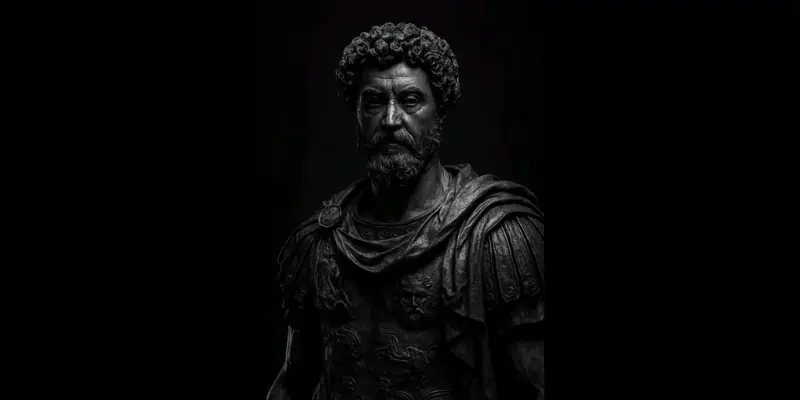
Historical context. Marcus Aurelius ruled the Roman Empire from 161 to 180 AD, much of it spent on military campaigns rather than in the comfort of a palace. He was, by nearly every biographer’s account, not a naturally cheerful or energetic man. He was often unwell, frequently exhausted, and burdened by responsibilities most people today cannot imagine.
Morning routine. According to historical accounts and his own private writings, Marcus Aurelius began his day by reminding himself, in writing, that the people he would soon deal with — the ambitious, the ungrateful, the arrogant — were not obstacles to be resented, but the very reason his self-discipline mattered. This wasn’t pessimism. It was psychological preparation.
Why it mattered. Marcus Aurelius was not writing Meditations for an audience. He was writing it to train his own mind, privately, before the empire’s demands could hijack his emotional state. This is one of history’s clearest examples of self-regulation as a deliberate morning practice rather than an accident of personality.
Scientific explanation. Modern psychology confirms this instinct. Anticipating adversity in advance — a technique now called “negative visualization” in Stoic discipline and “mental contrasting” in behavioral psychology — measurably reduces emotional reactivity when difficulty actually arrives. It primes the executive control systems of the brain to respond deliberately, rather than react impulsively.
Modern takeaway. You do not need to be an emperor to benefit from this. Spending five minutes each morning mentally rehearsing the friction you’re likely to face — a difficult conversation, a demanding project, a frustrating commute — measurably improves your composure when that friction arrives.
Practical application. Before checking your phone, write two or three sentences: What difficulty might I face today, and how do I want to respond to it? This single habit is arguably the most accessible entry point into Marcus Aurelius Teachings for a modern reader, and it costs nothing but a notebook.
Benjamin Franklin: The Architect of the Modern Morning Routine
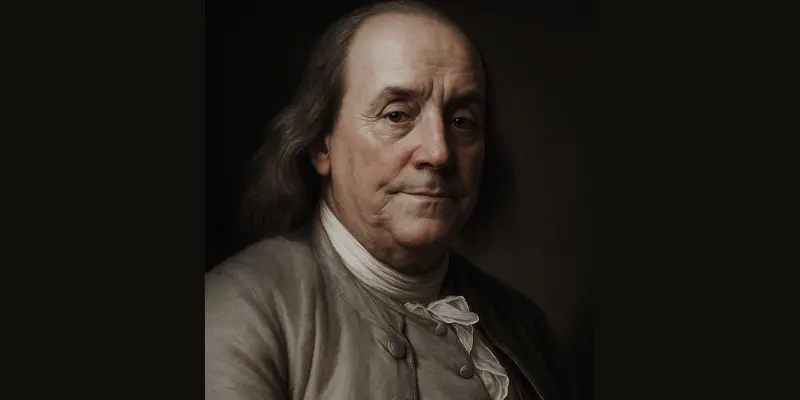
Historical context. Benjamin Franklin — printer, diplomat, scientist, and Founding Father — is one of history’s most well-documented self-improvers. His autobiography remains one of the clearest firsthand records of a disciplined life, making him a rare case where the evidence is unusually strong rather than merely inferred.
Morning routine. Franklin reportedly rose around 5 AM and began his day by asking himself a single, disarmingly simple question: “What good shall I do this day?” He then planned his schedule, addressed his most important work, and reviewed his conduct.
Why it mattered. Franklin didn’t merely plan tasks — he planned virtue. He famously tracked thirteen personal virtues, including temperance, order, and industry, reviewing his behavior against them daily. This transformed morality from an abstract idea into a trackable, improvable system — centuries before modern habit-tracking apps existed.
Scientific explanation. Franklin’s morning question functioned as an early form of identity-based habits — a concept behavioral scientists now consider one of the most powerful drivers of long-term change. Asking “what good shall I do” is not a task question; it is an identity question, and identity questions are far more motivating than simple to-do lists because they engage a person’s sense of self, not just their calendar.
Modern takeaway. Franklin’s system also protected against decision fatigue — the well-documented psychological phenomenon in which the quality of our decisions deteriorates the more decisions we are forced to make in a day. By planning his day each morning, Franklin front-loaded his most important decisions while his mind was clearest.
Practical application. Each morning, write one sentence answering Franklin’s question in your own words. Then identify the single most important task of your day and do it before checking messages. This is one of the simplest entry points into being disciplined in a way that compounds over years, not days.
Charles Darwin: The Power of the Repeated Walk
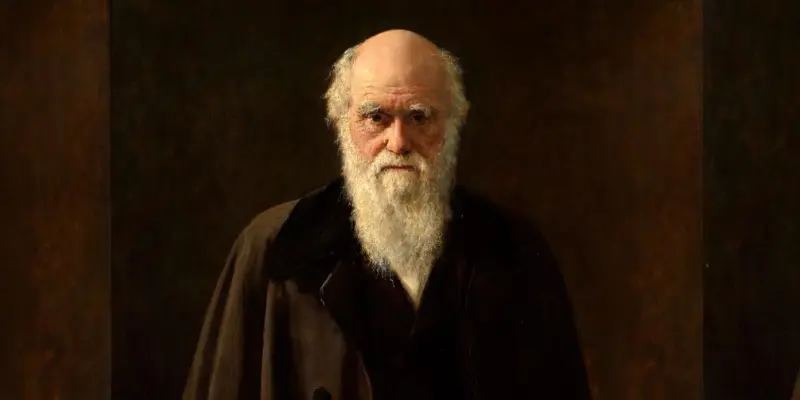
Historical context. Charles Darwin was, by his own admission, not a naturally energetic or robust man. He suffered from chronic illness for much of his adult life. Yet he produced one of the most consequential scientific theories in human history through an almost monastic daily structure.
Morning routine. Darwin reportedly woke early, took a short walk, and then worked in focused blocks, beginning with his most demanding intellectual labor before breakfast. Biographers note that he treated his daily walk not as leisure, but as a working tool — a space where his best thinking occurred.
Why it mattered. Darwin instinctively separated deep, generative thinking from shallow administrative work, and he protected the former by scheduling it first, when his mind was least fatigued and least interrupted.
Scientific explanation. This aligns precisely with what researchers now call deep work — cognitively demanding effort performed without distraction, which produces disproportionately higher-value output than fragmented, reactive work. Movement-based thinking is also well-supported: walking has been shown to increase associative thinking and idea generation, likely due to increased cerebral blood flow and reduced sensory overstimulation.
Modern takeaway. Darwin’s genius was not purely intellectual. It was structural. He built an environment that made deep thinking the default, not the exception.
Practical application. Try replacing fifteen minutes of morning scrolling with a short walk before your most demanding task. Notice whether your thinking sharpens. This single substitution is one of the most evidence-backed examples of daily rituals a reader can adopt today.
Leonardo da Vinci: Observation as a Discipline
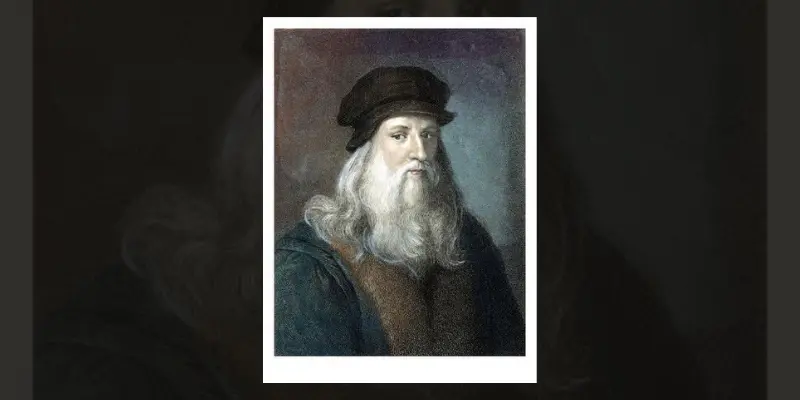
Historical context. Leonardo da Vinci’s genius is often mistaken for spontaneous inspiration. In reality, his notebooks reveal a man obsessively devoted to close observation — of anatomy, water, birds, light, and shadow — long before he ever picked up a brush.
Morning routine. According to accounts of his working habits, da Vinci spent significant portions of his mornings walking through nature, observing closely, and recording what he saw in dense, detailed notebooks. Movement and observation were inseparable from his creative and scientific output.
Why it mattered. Da Vinci treated attention itself as a skill to be trained, not a trait some people simply have. His notebooks are filled with painstaking studies of ordinary things — the way water eddies, the way muscles connect — because he understood that mastery is built from unglamorous repetition of careful noticing.
Scientific explanation. This connects directly to modern understanding of neuroplasticity — the brain’s capacity to reorganize itself through repeated practice. Da Vinci’s habitual observation likely strengthened neural pathways associated with visual-spatial reasoning and creative synthesis, the same mechanism modern researchers use to explain expert-level pattern recognition.
Modern takeaway. Creativity is rarely a lightning bolt. It is closer to compound interest — small, repeated deposits of attention that eventually produce disproportionate returns.
Practical application. Spend five minutes each morning observing something ordinary — a plant, the sky, a piece of your work — closely enough to describe it in writing. This trains the same attentional muscle da Vinci relied on for a lifetime.
Winston Churchill: Discipline That Doesn’t Look Like Discipline
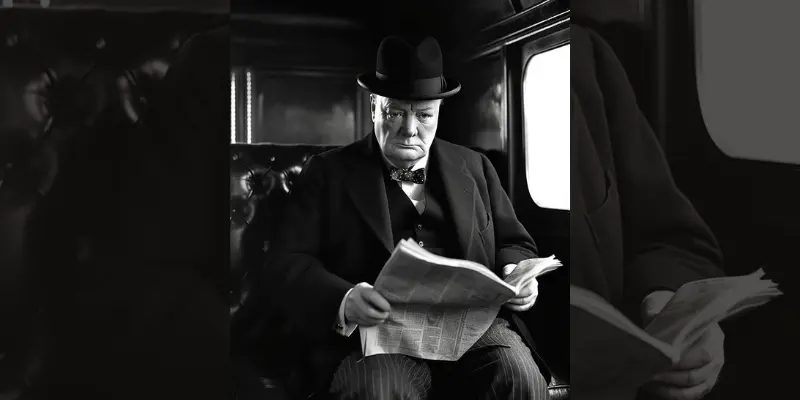
Historical context. Churchill led Britain through its darkest and most consequential hours in the Second World War, and his morning habits looked nothing like the ascetic routines of Franklin or Marcus Aurelius. This makes him a valuable — and often misunderstood — case study.
Morning routine. According to multiple biographers, Churchill often worked from bed for the first hours of his day, reading government dispatches, dictating letters, and reviewing intelligence reports over breakfast, sometimes accompanied by a cigar. It did not resemble a stereotypical “disciplined” morning at all.
Why it mattered. Churchill’s mornings reveal an important nuance: discipline is not aesthetic. It is functional. He was not lounging — he was working, thinking, and making consequential decisions, simply in a physical posture that violates modern assumptions about what discipline should look like.
Scientific explanation. This illustrates an important psychological distinction between self-regulation and self-punishment. Discipline is the consistent direction of effort toward a meaningful goal — not suffering for its own sake. Churchill’s unconventional mornings still protected his cognitive performance, prioritized high-value information intake, and preserved his mental energy for decisions that genuinely required it.
Modern takeaway. A disciplined morning does not have to look like anyone else’s. What matters is whether your first hour is oriented toward purpose or toward avoidance.
Practical application. Rather than adopting someone else’s morning aesthetic, ask a more useful question: Is my first hour built around what matters, regardless of how it looks to others?
Muhammad Ali: Discipline as Devotion
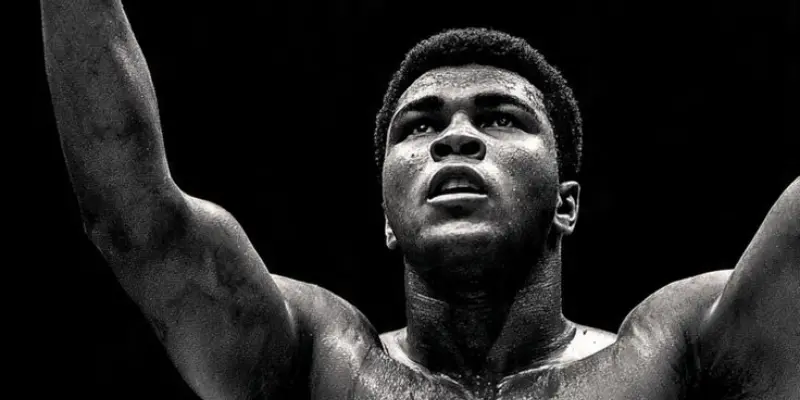
Historical context. Muhammad Ali’s greatness is often remembered for his charisma inside the ring. Less discussed is the extraordinary discipline required to sustain the training regimen behind it, combined with his deep personal faith.
Morning routine. According to accounts from his training camps, Ali’s mornings often began with prayer, followed by long-distance running — frequently before dawn, in the discomfort of early morning cold, well before the rest of the world was awake.
Why it mattered. Ali’s early runs were not primarily about cardiovascular fitness. They were an exercise in mental resilience — proof, repeated daily, that he could do the hard thing before anyone was watching or applauding.
Scientific explanation. This reflects what sports psychologists describe as “training the mind through the body.” Physical discomfort endured voluntarily and repeatedly builds self-command — a transferable psychological resource that shows up later in moments of pressure, whether in a boxing ring or a boardroom. This is also a foundational principle behind modern body transformation programs: the body is often the most direct and immediate training ground for the mind.
Modern takeaway. Discipline in one domain — physical training — tends to transfer into discipline in others, because both draw on the same underlying capacity for self-regulation.
Practical application. Choose one physically uncomfortable habit — a cold shower, an early run, a demanding workout — and perform it before anything else in your day. The goal is not fitness alone. It is proof to yourself that your word to yourself means something.
Comparison Table: Morning Routines of Disciplined Historical Figures
| Historical Figure | Wake Time | Morning Habit | Mental Practice | Physical Practice | Main Lesson |
|---|---|---|---|---|---|
| Marcus Aurelius | Reportedly before dawn | Private philosophical writing | Negative visualization, self-reflection | Minimal; focus on mental readiness | Prepare your mind for adversity before it arrives. |
| Benjamin Franklin | ~5:00 AM | Daily planning and virtue review | Identity-based questioning, self-audit | Cold-air bathing (reported) | Ask what good you intend to do, then plan for it. |
| Charles Darwin | Early morning | Focused walk, then deep work | Deep work before shallow tasks | Daily walking | Protect your best thinking from distraction. |
| Leonardo da Vinci | Early morning | Walking and close observation | Attentive observation, notebook recording | Walking, exploring nature | Train attention like a skill, not a trait. |
| Winston Churchill | Later, but immediately working | Reading dispatches, dictation from bed | High-value information triage | Minimal in early hours | Discipline is about function, not appearance. |
| Muhammad Ali | Before dawn | Prayer, then long-distance running | Faith-based reflection, mental toughness | Intense early-morning running | Voluntary discomfort builds lasting resilience. |
The Science Behind Disciplined Morning Routines
Historical intuition and modern neuroscience arrive, remarkably, at the same conclusions.
Habit formation. Behavioral scientists describe habits as automated behavioral loops — cue, routine, reward — that reduce the cognitive load required to repeat a behavior. Morning routines work because they concentrate a person’s most important habits into a low-distraction window, making them easier to automate than habits attempted later in a chaotic day.
Decision fatigue. Every decision a person makes draws on a finite pool of mental resources. By the afternoon, this pool is measurably depleted, leading to poorer choices — a phenomenon widely documented in behavioral psychology research on judicial rulings, dietary choices, and workplace performance. Historical figures who planned or made important decisions early were, likely unknowingly, protecting themselves from this decline.
Deep work and attention residue. When a person switches from one task to another — especially from a low-value task like checking a phone to a high-value task like focused work — a residue of attention remains stuck on the previous task, reducing performance on the new one. Morning routines that avoid early distraction protect against this cost before the day’s first real task begins.
Exercise, sleep, and circadian rhythm. Morning cortisol naturally peaks shortly after waking as part of the body’s circadian rhythm, contributing to alertness. Movement early in the day has been shown to improve mood regulation and cognitive performance for hours afterward, while consistent wake times help stabilize the sleep-wake cycle, improving long-term sleep quality — a foundational, often overlooked input to cognitive performance and emotional regulation.
Neuroplasticity and reflection. Repeated reflective practices, such as journaling or planning, are associated with strengthened neural pathways related to emotional regulation and self-awareness. This offers a modern, evidence-based explanation for why Marcus Aurelius’s private writing and Franklin’s virtue tracking were not merely philosophical exercises — they were, functionally, brain training.
Chronological Order of Daily Routine: A Framework, Not a Formula
While no single schedule fits everyone, most disciplined historical routines follow a similar chronological order of daily routine, even across radically different eras:
- Wake — at a consistent time, ideally aligned with natural light.
- Hydrate — a small but often-overlooked reset for the body after hours without water.
- Reflection — journaling, prayer, or quiet thought before external input begins.
- Planning — identifying the day’s most important task, in the spirit of Franklin’s morning question.
- Movement — walking, training, or exercise, echoing Darwin, da Vinci, and Ali.
- Deep work — the most cognitively demanding task, completed while mental resources are freshest.
- Breakfast — nourishment, often deliberately positioned after the most important work, not before it.
- Communication — messages, calls, and correspondence, intentionally delayed until the mind has already accomplished something meaningful.
- Learning — reading or study, closing the loop between reflection and action.
This sequence is not a rigid rulebook. It’s a logic — protect your mind before you spend it on other people’s demands.
Examples of Daily Rituals Readers Can Adopt Today
- The Two-Minute Reflection: Before touching your phone, write one sentence about what kind of person you want to be today.
- The Franklin Question: Ask, “What good shall I do this day?” and identify one concrete action tied to the answer.
- The Darwin Walk: Take a 10–15 minute walk before your first major task, without headphones or a phone.
- The Da Vinci Notebook: Observe one ordinary object closely enough to describe it in three sentences.
- The Ali Discomfort Habit: Choose one small physical discomfort — a cold shower, a brisk run — and complete it before checking any screen.
These are not gimmicks. They are compressed versions of principles that took these men years to refine.
Build Your Own Disciplined Morning Routine
The most common mistake readers make after studying historical routines is trying to copy them exactly — Franklin’s 5 AM wake time, Ali’s pre-dawn run, Marcus Aurelius’s asceticism — without accounting for their own biology, obligations, or season of life.
Instead, build your routine around four questions:
- What does my mind need protected time for? (Reflection, planning, or deep work.)
- What does my body need before it can perform? (Movement, hydration, sunlight.)
- What distraction do I need to delay? (Phones, messages, news.)
- What is the one difficult thing I should do first?
A disciplined morning routine is not a checklist. It is a personal system for governing your attention before the world starts competing for it.
Reflection prompt: If someone secretly observed your first hour tomorrow morning, would they describe you as someone in control of your day — or someone reacting to it?
Common Morning Mistakes
- Checking your phone before your mind is your own. This immediately hands your attention — and often your emotional state — to someone else’s agenda.
- Confusing motion with progress. Answering easy emails first feels productive but delays the one task that actually matters.
- Skipping movement entirely. Physical stillness in the morning often correlates with sluggish cognitive performance later in the day.
- Copying someone else’s schedule instead of their principles. A 4 AM wake time means nothing if it’s not paired with purpose.
- Treating the morning as optional. Historical evidence overwhelmingly suggests that disciplined lives were built through consistency, not occasional bursts of willpower.
Conclusion
None of the men in this article became disciplined because they found the perfect morning schedule. They became disciplined because they treated their first waking hour as something worth protecting — a space where they could practice governing themselves before the world arrived with its demands, its noise, and its distractions.
Marcus Aurelius wrote to prepare his mind for people who would frustrate him. Franklin asked a single question to orient an entire day around purpose. Darwin and da Vinci walked before they worked, understanding that attention is a skill built through repetition. Churchill proved that discipline doesn’t require a specific posture, only a specific intention. And Ali ran before sunrise, not for applause, but as private proof that his word to himself still meant something.
The goal is not to copy another person’s schedule. The goal is to become someone who governs himself before the world begins demanding his attention.
That is the real inheritance these men left behind — not a wake-up time, but a way of meeting the day on your own terms, deliberately, before it has the chance to meet you first.
FAQ
What did the most disciplined men in history do first thing in the morning?
Most began with reflection, planning, or focused work rather than entertainment or distraction. Figures like Marcus Aurelius wrote privately to prepare his mindset, while Benjamin Franklin planned his day around a single guiding question. Charles Darwin and Leonardo da Vinci prioritized movement and observation before demanding intellectual work. The common thread wasn’t a specific activity, but the decision to engage purposefully with their mind before allowing outside demands, messages, or distractions to shape their focus. This pattern reflects an early, intuitive understanding of what modern psychology now studies as decision fatigue and attention protection.
What time did successful historical figures wake up?
Wake times varied significantly. Benjamin Franklin reportedly rose around 5 AM, while Winston Churchill worked from bed later in the morning but remained highly productive. Muhammad Ali often ran before dawn. There was no universal wake time among history’s most disciplined men, which suggests that the specific hour mattered far less than what was done with the time immediately after waking. Modern sleep science supports this — consistency and how the first hour is used tend to matter more for performance than the exact clock time.
Is waking up early necessary for discipline?
No. While many historical figures woke early, Winston Churchill’s routine demonstrates that a later wake time paired with focused, purposeful use of the morning can be equally disciplined. Discipline is better defined as the consistent direction of attention toward meaningful goals, not a specific hour on a clock. What matters more is protecting the first part of your day, whenever it begins, from reactive distractions like phones, messages, or unstructured scrolling.
How do morning routines reduce decision fatigue?
Decision fatigue occurs when the quality of decision-making declines after making many decisions throughout the day. By planning key decisions and priorities early, before mental resources are depleted, morning routines protect a person’s best thinking for their most important tasks. This is why figures like Benjamin Franklin planned his entire day each morning, rather than making decisions reactively as the day unfolded. Structuring your morning around planning, rather than open-ended reaction, preserves cognitive energy for choices that matter most.
What is Stoic discipline, and how does it apply to mornings?
Stoic discipline refers to a philosophical framework, most closely associated with figures like Marcus Aurelius, focused on self-command, emotional regulation, and preparing rationally for adversity. Applied to mornings, it means using early quiet time to mentally rehearse challenges, review personal values, and choose a deliberate response to the day ahead rather than allowing external events to dictate one’s emotional state. It’s less about rigid rules and more about intentional self-governance practiced consistently, especially before the demands of the day begin.
Why did historical figures value physical movement in the morning?
Movement was rarely treated as optional among history’s most disciplined men. Darwin walked before deep work, da Vinci observed nature while walking, and Ali ran before dawn. Modern research suggests morning movement supports mood regulation, alertness, and cognitive performance for hours afterward, likely connected to circadian rhythm and increased cerebral blood flow. Historically, this movement often doubled as thinking time, suggesting these men intuitively understood a connection between physical activity and mental clarity long before it was scientifically documented.
What can modern professionals learn from these historical routines?
The core lesson isn’t a specific schedule but a set of transferable principles: protect your mind before distraction reaches it, do difficult work while mental resources are freshest, and use reflection to set intention rather than reacting to circumstances. Modern professionals can apply this by identifying their own most important task, protecting a distraction-free window for it, and building small, repeatable rituals — like planning or brief reflection — that fit realistically into their own responsibilities and constraints.
Did all disciplined historical figures follow the same routine?
No, and that variation is instructive. Marcus Aurelius practiced quiet philosophical writing, Franklin structured his day around planning and virtue tracking, and Churchill worked from bed reviewing dispatches. Despite these differences, each routine protected focused thinking, prioritized meaningful work, and avoided passive distraction. This suggests that discipline is defined by underlying principles — purpose, protection of attention, and consistency — rather than by any single “correct” set of morning actions.
How does journaling relate to historical morning discipline?
Several disciplined historical figures, most notably Marcus Aurelius, used private writing as a core morning practice. This wasn’t diary-keeping for its own sake — it functioned as psychological preparation, helping process anticipated challenges and reinforce personal values before the day began. Modern research on reflective writing supports this approach, associating it with improved emotional regulation and self-awareness. A few minutes of honest, private writing each morning remains one of the most evidence-backed rituals from this historical tradition.
What is the biggest misconception about disciplined morning routines?
The biggest misconception is that discipline requires copying someone else’s exact schedule — a specific wake time, a specific set of habits. In reality, historical evidence shows enormous variation between disciplined figures. The real pattern isn’t a shared timetable; it’s a shared commitment to protecting focus, doing difficult things early, and reflecting with purpose. A disciplined morning routine should be built around your own responsibilities and biology, not borrowed wholesale from a historical figure’s very different life.

Abhishek Negi is the founder and content creator behind Peak Mode Life. He writes about fitness, nutrition, wellness, relationships, and healthy living. His goal is to simplify health information into practical, actionable advice that helps readers build sustainable habits and improve their overall quality of life.