
Table of Contents
Introduction
“You’re not weak. You’re just silently breaking.”
You wake up, go to work, handle responsibilities, and keep moving forward. On the outside, everything looks fine. You are functioning. You are showing up. But deep inside, something feels off—like a constant weight you can’t explain.
This is the reality many men are living today.
The truth is, the mens mental health crisis is not loud. It doesn’t always look like breakdowns or visible sadness. It shows up as emptiness, irritation, lack of purpose, and quiet exhaustion. In 2026, this crisis is growing faster than most people realize, yet it remains largely ignored.
Most men don’t talk about it. Many don’t even recognize it.
This is not another soft guide filled with generic advice. This is clarity—clear insight into what’s really happening, why it’s happening, and what you can actually do to regain control.
The Reality of Men’s Mental Health Crisis in 2026
The men’s mental health crisis is not a theory. It is backed by hard data, and the numbers reveal a disturbing pattern.
Statistics on Men Mental Health
| Metric | Data |
|---|---|
| Men experiencing depression annually | 6+ million |
| Suicide rate (men vs women) | 4x higher |
| Men seeking therapy | < 40% |
| Undiagnosed cases | Extremely high |
At first glance, these numbers seem clear. But the real situation is far worse than what the data shows.
Why These Numbers Are Underreported
A large part of the problem lies in how male mental health is expressed and perceived.
Men are far less likely to:
- Admit they are struggling
- Seek professional help
- Openly discuss emotional pain
Instead of saying “I feel depressed,” many men express it differently:
- Anger instead of sadness
- Isolation instead of vulnerability
- Overworking instead of slowing down
Because of this, millions of cases go undiagnosed. What gets recorded in reports is only a fraction of the actual problem.
The Role of Stigma
From a young age, men are conditioned to believe:
- Emotions are weakness
- Silence is strength
- Endurance defines masculinity
This stigma around mens mental health creates a dangerous cycle. The more a man suppresses what he feels, the less likely he is to understand it—and the harder it becomes to fix it.
The result is a growing population of men who are not visibly broken, but internally struggling. A depressed young man today may not look depressed at all. He may look productive, disciplined, and normal—while quietly dealing with male depression and anxiety beneath the surface.
Understanding this reality is the first step. Ignoring it is what keeps the cycle alive.
Why Men Don’t Talk About Mental Health
“Silence isn’t strength. It’s suppression.”
Most men are not unaware of their struggles. They are untrained in how to face them.
From an early age, men are conditioned to believe that emotional control means emotional denial. “Men don’t cry” is not just a phrase—it becomes a rule. Over time, that rule turns into identity. A man learns to endure, not express. He learns to function, not reflect.
This conditioning creates a dangerous disconnect. The mind continues to accumulate pressure, but there is no outlet to release it.
Another major factor is the fear of being seen as weak. In many environments—social, professional, even personal—men are judged based on their ability to stay composed under pressure. Admitting mental struggle can feel like losing status, respect, or control. So instead of speaking, men adapt. They mask. They continue.
There is also a deeper issue: a lack of emotional vocabulary. Many men simply don’t have the language to describe what they feel. They can recognize stress or anger, but not the layers beneath it—confusion, emptiness, anxiety, or quiet burnout. Without the ability to name the problem, solving it becomes nearly impossible.
This is how the cycle continues. Not because men don’t suffer—but because they’ve been taught to suffer in silence.
Hidden Signs of Male Depression (Most Men Ignore)

The biggest misconception about male depression and anxiety is that it looks obvious. It doesn’t.
In men, depression rarely shows up as visible sadness. It hides behind behavior that is often normalized or even praised. What looks like discipline, toughness, or independence can sometimes be unresolved internal conflict.
Behavioral Patterns and Their Hidden Meaning
| Visible Behavior | Hidden Meaning |
|---|---|
| Anger | Emotional overload |
| Isolation | Mental exhaustion |
| Overworking | Avoidance |
| Addictions | Escape from reality |
Anger is one of the most common expressions. A man may not say he is overwhelmed, but it shows in his short temper, frustration, or aggression. It is not always about the situation—it is often the result of unprocessed pressure.
Isolation is another silent indicator. Pulling away from people is not always about wanting space. In many cases, it reflects mental fatigue and an inability to engage meaningfully.
Overworking is often misunderstood as ambition. While discipline is valuable, constant busyness can become a form of avoidance. It keeps the mind occupied so it doesn’t have to confront what’s underneath.
Addictions—whether to substances, screens, or stimulation—are often attempts to escape internal discomfort. They provide temporary relief, but reinforce long-term instability.
A depressed young man may not identify with the word “depression” at all. He may simply believe he is tired, distracted, or unmotivated. But beneath that surface, the pattern of male depression and anxiety is already forming.
Recognizing these signs is not about labeling yourself. It is about understanding your internal state with honesty—because awareness is the first form of control.
The Truth About the “Depressed Young Man”
The image of a depressed young man is often misunderstood.
He is not always lying in bed or visibly broken. In many cases, he is active, connected, and functioning. He scrolls, works, interacts, and keeps up with life. But internally, there is a growing sense of emptiness—an absence of drive, clarity, and meaning.
One of the biggest contributors is constant social comparison. Through social media, a young man is exposed to curated versions of success, wealth, physique, and lifestyle—every single day. Over time, this creates a silent pressure to measure up. Even when he is doing well, it never feels enough. The result is quiet dissatisfaction and self-doubt.
Another major factor is dopamine-driven behavior. Easy access to stimulation—especially through digital content—has rewired how the brain responds to reward. Short bursts of pleasure replace long-term fulfillment. This pattern gradually reduces focus, motivation, and emotional stability.
This connects deeply with the effects of mastubation, where repeated stimulation can influence energy levels, attention span, and mental clarity. Many also question whether masturbation harmful patterns contribute to lack of motivation and emotional numbness. While the conversation is often simplified, the deeper issue lies in how constant stimulation affects the brain’s reward system.
A depressed young man is not always someone who has failed. Often, he is someone who has lost direction in a world full of distractions.
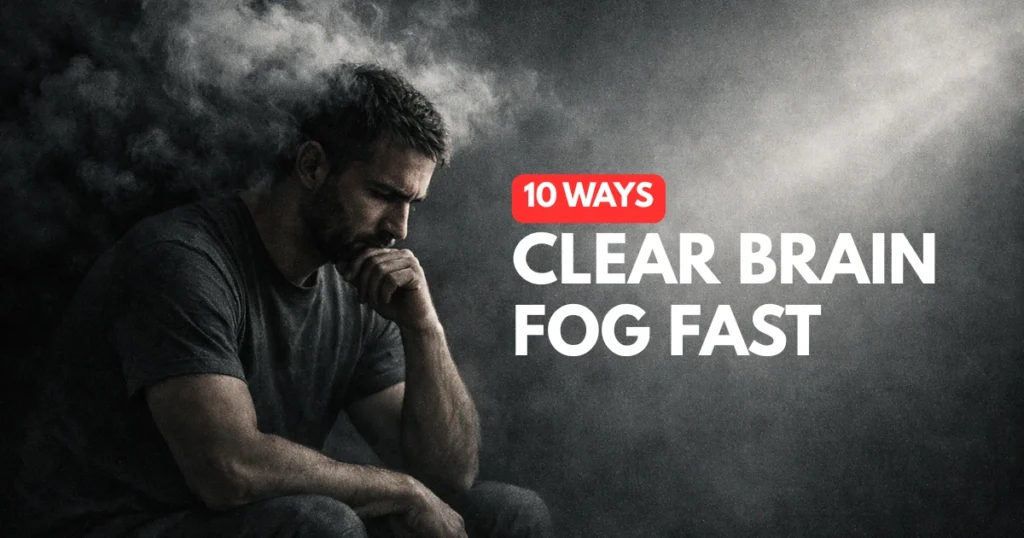
Also Read – 10 Effective Ways to Clear Brain Fog Fast
The Real Causes of Men’s Mental Health Decline
The decline in mens mental health is not caused by a single factor. It is the result of overlapping patterns—psychological, neurological, and behavioral. Understanding these root causes is essential, because surface-level solutions cannot fix a system-level problem.
Dopamine Overload (Phones, Porn, Instant Gratification)
The modern environment is designed for constant stimulation. Social media, short-form content, porn and instant gratification create repeated spikes of dopamine in the brain.
Over time, this leads to:
- Reduced attention span
- Lower baseline motivation
- Increased mental fatigue
The brain becomes conditioned to seek quick rewards instead of meaningful effort. As a result, tasks that require discipline—work, growth, relationships—start to feel harder than they actually are.
Lack of Purpose
A man without direction does not lack energy—he lacks focus.
Purpose acts as a stabilizing force. It gives structure to effort and meaning to struggle. Without it, even small challenges feel overwhelming. Many men today are busy, but not aligned with anything meaningful. This creates a constant feeling of drifting.
When there is no clear reason to push forward, motivation fades, and confusion takes its place.
Financial & Social Pressure
Modern society places a heavy burden on men to perform—financially, socially, and professionally.
Expectations include:
- Earning enough
- Maintaining status
- Providing stability
When these expectations are not met—or even when they are—it creates pressure that is rarely discussed. Many men internalize this stress instead of expressing it, leading to anxiety, burnout, and long-term mental strain.
Isolation & Loneliness
Despite being more digitally connected than ever, many men are socially isolated.
Real conversations have been replaced by surface-level interactions. Brotherhood, trust, and deep connection are missing from many lives. Without a support system, problems stay internal. And when thoughts are not expressed, they intensify.
Isolation does not just affect emotions—it reshapes thinking patterns, making negativity more persistent and harder to break.
Final Insight
The decline in male mental health is not just emotional—it is deeply neurological and behavioral.
It is shaped by:
- How the brain is stimulated
- How habits are formed
- How pressure is processed
This is why generic advice fails. Because the problem is not just how men feel—it is how they live, think, and operate on a daily level.
Understanding the cause is what allows real control.
Male Mental Health vs Female Mental Health
Understanding male mental health requires recognizing one simple truth: men and women do not process or express emotional distress in the same way.
This difference is often misunderstood, leading to misdiagnosis, ineffective advice, and a widening gap in how mental health support is delivered.
Key Differences in Expression and Coping
| Aspect | Men | Women |
|---|---|---|
| Expression | Suppressed | Expressed |
| Coping | Action / avoidance | Communication |
| Diagnosis Rate | Low | Higher |
Men are not less emotional. They are less expressive in conventional ways.
While women are more likely to verbalize their feelings, men often internalize them. Instead of talking through problems, they tend to act—either by trying to fix the issue, distracting themselves, or avoiding it altogether.
This difference directly impacts diagnosis rates. Because most mental health systems are built around verbal expression and emotional openness, men are less likely to be accurately diagnosed. Their symptoms often appear behavioral rather than emotional—anger, withdrawal, or overwork—which are not always immediately recognized as signs of distress.
The result is a gap between what men experience and what gets identified.
Men don’t feel less. They express differently.
Recognizing this distinction is critical. Without it, the mens mental health crisis will continue to be misunderstood and poorly addressed.
Why Most Mental Health Advice Fails Men
“A man doesn’t need comfort. He needs direction.”
Most mental health advice today is built on a model that does not fully align with how men process struggle.
Common suggestions include:
- “Just talk about it”
- “Take rest”
- “Be open with your emotions”
While these approaches can be helpful in certain contexts, they often fail to resonate with men who are wired to seek structure, control, and solutions.
The issue is not that men reject help. The issue is that the help offered often lacks practicality.
Telling a man to “just talk” without giving him clarity on what he is dealing with does not solve the problem. It creates more confusion. Similarly, telling him to “rest” when he feels lost or unproductive can increase feelings of guilt and stagnation.
What most men need is not passive comfort—it is active direction.
They need:
- Clear understanding of their internal state
- Practical steps to regain control
- Systems and habits that rebuild stability
This is where a more grounded, structured approach becomes effective. Instead of focusing only on emotional expression, it focuses on behavior, discipline, and clarity.
The failure of modern advice is not in its intention, but in its lack of alignment with how men operate.
When guidance shifts from comfort to direction, results begin to change.
Stoic Solutions to Fix Men’s Mental Health

Most men don’t need more information. They need structure they can follow.
The solution to the men’s mental health crisis is not found in passive awareness—it is built through disciplined action. A Stoic approach does not ignore emotion; it trains you to manage it with control and clarity.
1. Control What You Can (Stoicism Core)
The foundation of stability is simple: focus only on what is within your control.
You cannot control:
- Other people’s opinions
- External outcomes
- Unexpected setbacks
But you can control:
- Your thoughts
- Your actions
- Your habits
When a man loses control of his internal state, everything outside begins to feel overwhelming. Rebuilding male mental health starts by narrowing your focus. Discipline your thinking. Choose your actions deliberately. Repeat behaviors that strengthen you.
Control creates clarity. Clarity reduces chaos.
2. Build Discipline Over Motivation
Motivation is unreliable. It comes and goes based on mood, energy, and environment.
Discipline is different. It does not depend on how you feel.
Most men struggling with male depression and anxiety are waiting to “feel ready” before they act. That moment rarely comes. The Stoic approach reverses this pattern.
Action comes first. Feeling follows.
A structured routine removes decision fatigue and emotional resistance. When your day is built around consistent habits, you reduce uncertainty and increase stability.
Routine is greater than feelings. Consistency is greater than intensity.
3. Fix Your Dopamine System
Your mental state is directly influenced by how your brain processes reward.
Constant stimulation from:
- Social media
- Short-form content
- Explicit content
has conditioned the brain to seek instant gratification. Over time, this weakens focus, reduces motivation, and increases mental fatigue.
To restore balance:
- Reduce unnecessary screen time
- Limit high-frequency dopamine triggers
- Replace quick rewards with meaningful effort
Many men overlook how digital habits affect their mental clarity. This is closely connected to patterns discussed in the effects of mastubation, where repeated stimulation can impact focus and energy. It also raises the question of whether masturbation harmful behaviors contribute to long-term mental fog and reduced drive.
The goal is not elimination—it is control. When you regulate input, you regain output.
4. Physical Strength = Mental Strength
The connection between body and mind is not optional—it is direct.
Physical movement:
- Regulates stress hormones
- Improves mood stability
- Increases mental resilience
A sedentary lifestyle weakens both physical and psychological capacity. On the other hand, consistent training builds structure, discipline, and confidence.
For a man, strength is not just physical. It reinforces identity.
Regular exercise—whether it is strength training, running, or structured movement—acts as a stabilizing force. It gives you a controlled environment where effort leads to measurable progress. That sense of control translates into other areas of life.
5. Brotherhood & Support System
Isolation amplifies mental struggle.
Men are not designed to operate alone under pressure. Historically, strength was built within groups—teams, tribes, brotherhoods. Today, many men lack that structure.
A strong support system is not about constant emotional sharing. It is about:
- Trust
- Accountability
- Honest conversation
Having a few reliable individuals who understand your mindset can prevent problems from escalating. Without that, thoughts remain internal and grow unchecked.
A man in isolation is more vulnerable to overthinking, self-doubt, and burnout.
6. Seek Help Without Ego
One of the biggest barriers in mens mental health is the belief that seeking help is a sign of weakness.
In reality, it is a strategic decision.
Professional support—whether through therapy, counseling, or structured guidance—provides:
- Objective perspective
- Tools for managing thought patterns
- Clarity in decision-making
Reframing is important. Therapy is not about venting. It is about understanding and correcting internal systems.
A man who seeks help is not losing control. He is choosing to regain it more efficiently.
Lifestyle Factors Destroying Male Mental Health
Not all mental health issues begin in the mind. Many are reinforced by daily lifestyle patterns.
Small, repeated behaviors shape long-term outcomes. Ignoring them weakens even the strongest mindset.
For deeper insights into how daily habits influence overall well-being, refer to detailed health articles that break down these patterns further.
Sleep Disruption
Lack of proper sleep affects:
- Cognitive function
- Emotional regulation
- Energy levels
Chronic sleep deprivation increases irritability, reduces focus, and intensifies symptoms of male depression and anxiety. Without recovery, the mind cannot stabilize.
Poor Diet
Nutrition directly impacts brain function.
Highly processed foods, irregular eating patterns, and lack of essential nutrients contribute to:
- Energy crashes
- Brain fog
- Mood instability
A disciplined diet supports both physical and mental performance.
Addiction Cycles
Addictions are often symptoms, not causes.
Whether it is:
- Digital consumption
- Substance use
- Escapist behaviors
they create temporary relief while reinforcing long-term instability. Over time, they reduce a man’s ability to face discomfort directly.
Breaking these cycles requires awareness and controlled reduction—not avoidance, but restructuring.
Final Insight
The state of male mental health is not shaped by one decision. It is built through repeated patterns.
Change does not come from a single breakthrough. It comes from consistent correction.
When a man aligns his habits, controls his inputs, and builds structure into his daily life, stability follows.
Daily Routine to Rebuild Mental Strength
Mental strength is not built in moments of motivation. It is built through structure.
A consistent routine reduces chaos, stabilizes your internal state, and creates a sense of control. For men navigating the mens mental health crisis, structure is often the missing piece between awareness and recovery.
Daily Structure for Stability
| Time | Activity |
|---|---|
| Morning | Exercise + sunlight |
| Afternoon | Deep work |
| Evening | Reflection + minimal screen |
| Night | Sleep discipline |
The morning sets the tone. Physical movement combined with natural light helps regulate hormones, improve focus, and establish momentum early in the day.
The afternoon should be directed toward meaningful work. This is where discipline is applied. Focused effort builds a sense of progress, which directly impacts male mental health by reinforcing purpose and control.
Evenings are for slowing down. Reducing screen exposure and taking time to reflect allows the mind to process the day instead of escaping it. This is where clarity begins to form.
Night is non-negotiable. Sleep discipline is one of the most overlooked factors in managing male depression and anxiety. Without proper rest, emotional regulation weakens and mental fatigue compounds
Frequently Asked Questions
Q1: What are the biggest issues in men’s mental health today?
The biggest issues in mens mental health today include emotional suppression, lack of purpose, social isolation, and increasing dependence on digital stimulation. Many men are functioning externally but struggling internally with emptiness, burnout, and confusion. The rise of the men’s mental health crisis is driven by both psychological pressure and modern lifestyle habits that disrupt focus, discipline, and emotional stability.
Q2: Why is male mental health often ignored?
Male mental health is often ignored because men are conditioned to suppress emotions and avoid seeking help. Social expectations reinforce the idea that men must remain strong and self-reliant, which discourages open conversations. As a result, many men do not report symptoms, leading to under diagnosis and a lack of visible awareness compared to other mental health discussions.
Q3: What are common symptoms of male depression and anxiety?
Common signs of male depression and anxiety include irritability, anger, withdrawal from social interaction, lack of motivation, overworking, and reliance on distractions or addictions. Unlike traditional symptoms such as visible sadness, men often express distress through behavior rather than words, making it harder to recognize without deeper awareness.
Q4: How can a depressed young man recover?
A depressed young man can begin recovery by building structure into his daily life. This includes developing a consistent routine, reducing overstimulation from digital habits, engaging in physical activity, and reconnecting with meaningful goals. Seeking professional guidance can also accelerate recovery by providing clarity and practical tools. The process is not about instant change, but about consistent improvement.
Q5: What are the latest statistics on men mental health in 2026?
Recent statistics on men mental health show that over 6 million men experience depression annually, while men are nearly four times more likely to die by suicide compared to women. Less than 40% of men seek professional help, and a significant number of cases remain undiagnosed due to stigma and lack of emotional expression. These numbers highlight the growing scale of the men’s mental health crisis.
Conclusion
“You are not broken. You are undirected.”
This is the reality most men need to understand.
The struggle you feel is not a sign of weakness. It is a signal—one that points toward misalignment in habits, focus, and internal control. The mens mental health crisis is not just about emotions. It is about how men are living, thinking, and responding to modern pressures.
Real change does not require dramatic action. It begins with small, controlled steps.
Start small. Build one habit at a time.
Take control of what is within your reach.
Seek clarity instead of distraction.
You do not need to fix everything at once. You need to move with intention.
From an evidence-based perspective, insights from organizations like the World Health Organization and the National Institute of Mental Health continue to reinforce the importance of early awareness, structured intervention, and consistent behavioral change in addressing mental health challenges.
The path forward is not about avoiding struggle. It is about understanding it, facing it, and building the discipline to rise above it.
Clarity creates direction. Direction creates control.